
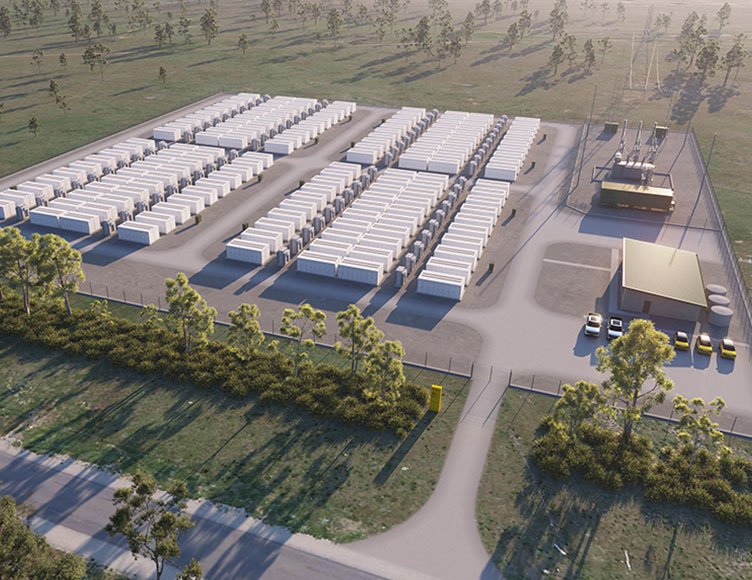
Across Germany, Italy and Switzerland, the price of a de-risked, ready-to-build battery storage project consistently sits well above the cost of developing one from scratch. Here is what the public market evidence shows, and why it matters for developers, landowners and capital allocators.
European battery storage evidence splits cleanly into two profiles. Greenfield and early-stage development — origination, land control, grid work, permitting and engineering — tends to cost in the low tens of thousands of euros per MW. Ready-to-build (RTB) project rights, where land, permits and a secured grid position have already been de-risked by a developer, trade at a materially higher price that reflects that completed work plus the seller's own economics.
That spread is not a market inefficiency — it is the price of de-risking, and it is where the value sits. A project that clears land control, permitting and grid connection captures the uplift between development cost and RTB value. The question is not whether that value exists; the evidence below is consistent across two markets that it does. The question is how to capture it without taking on the full risk of any single project.
In both Germany and Italy, publicly disclosed RTB transaction values run at roughly 3–8x the low end of disclosed greenfield development cost per MW.
Germany's connection queue is the clearest driver of the spread: the Bundesnetzagentur recorded roughly 400 GW of storage connection requests against around 25 GW of approvals in 2024, making a secured grid position itself a scarce and valuable asset independent of the underlying development cost.
| Profile | Indicative range | Basis |
|---|---|---|
| Greenfield development | Low tens of €k/MW | Development planning ranges reported across German market sources |
| RTB project rights | €50–150k/MW | Range spanning disclosed transactions and reported developer premiums |
| Disclosed RTB transaction | c. €115.6k/MW | Döllnitz RTB SPV (63 MW / 257 MWh), disclosed consideration ÷ capacity |
Sources: Bundesnetzagentur · Capcora / Terra One / CCI · Flower / Chint Solar · Flower FY2025 report · Enerdatics. German pricing references are quoted on a €/MW basis and are not duration-normalised across projects. Figures are third-party disclosures, not valuation opinions.
Italian RTB pricing is tracked quarterly through nTeaser transaction data and has moved materially in recent quarters, with reported medians declining from Q4 2025 to Q1 2026 amid regulatory uncertainty. The underlying greenfield development cost, disclosed by at least one listed developer, remains well below even the lower end of that range.
| Profile | Indicative range | Basis |
|---|---|---|
| Greenfield DEVEX | Below €10k/MW | Publicly disclosed developer cost reference |
| RTB, Q1 2026 | €15–48k/MW, median €37.5k/MW | nTeaser quarterly transaction data |
| RTB, Q4 2025 | €19.5–55k/MW, median €44k/MW | nTeaser quarterly transaction data |
Sources: BME Growth filing / Enerside · Enerside investor materials · nTeaser / pv magazine Italia · ESS News · Altea Green Power. Medians are quoted as portfolio-planning references; individual transactions occur across the full observed range.
The spread above is not free money — it is compensation for execution risk that a single greenfield project carries and a completed RTB project has already retired. Land control can fall through. A grid connection application can be rejected or delayed. Permitting can stall for reasons outside a developer's control. Development economics only outperform RTB acquisition pricing if enough of the underlying sites actually reach RTB status.
The way this is typically managed is by structuring around the risk rather than avoiding it: a wide portfolio of sites moving through a staged, gated funnel, where weaker sites are screened out early and cheaply — before the more expensive stages of capital are committed — and only sites that clear each gate proceed. This converts the question that matters at single-project level (will this site succeed) into a portfolio-level statistical property: what proportion of a sufficiently large, diversified pipeline is expected to reach RTB status, and at what blended cost once terminated-site costs are absorbed across the survivors.
That diversification benefit is not uniform across every kind of risk. Site-specific factors — a landowner negotiation, a local permitting quirk — diversify well across a large enough portfolio within one market. Country-level factors — grid-connection queue capacity, a regulatory shift — do not: they affect every project in that jurisdiction at once, and adding more sites within the same country does not reduce that exposure. Genuine risk mitigation therefore comes from two separate levers working together: breadth of pipeline within a market, and spread across markets with different regulatory and grid dynamics.
The gap between development cost and RTB value shapes decisions for three different groups active in the same market.
Value creation happens in the development phase itself — origination, permitting and grid work — rather than only at exit. That makes disciplined, stage-gated development economics the core of the business, not a preamble to it.
Sites that can support a credible development path toward RTB status carry a different value proposition than raw land. Understanding where a site sits on that path is central to structuring a fair lease or partnership.
Development and RTB acquisition are different risk-return profiles and should generally be underwritten and capitalised separately, not treated as interchangeable routes to the same exposure.